Importing the reject workflow template
Using your company credentials, sign-in to your Power Automate account.
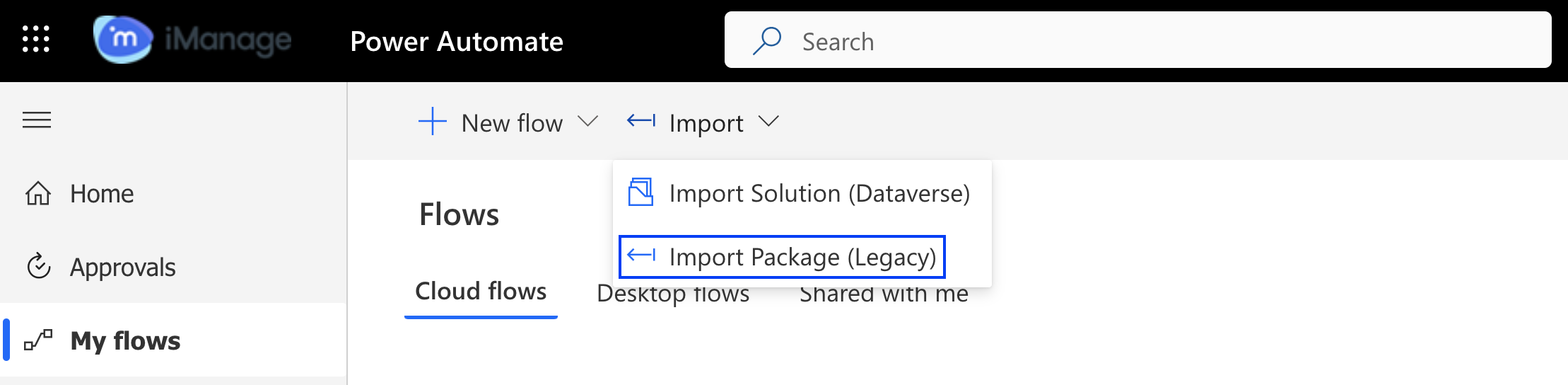
In the left pane, select My flows > Import > Import Package (Legacy).
Figure: Importing a package
Select Upload and then select the .zip template file from your file explorer. You will be directed to the next page where you must review the package contents.
Figure: Reviewing package contents

To complete uploading the templates, choose Select during import to establish a connection for each resource type that has a warning indication beside them.
In the Import setup dialog, select Create new. You'll be directed to the Connections page.
Select New connection. Since you are importing the Reject workflow template, you must have the following resource type connections established:
iManage Insight Plus Connection
iManage Work Connection
Search for the Insight Plus connector and then select Create. You'll be directed to your cloudimanage.com sign-in page. Enter your company credentials and select Import.
To install the iManage Work connector, repeat the same instructions as mentioned in Step 7.
The connectors are added and displayed on the Connections page.
After importing the workflow template successfully, you must configure the workflow.
Figure: Reject workflow
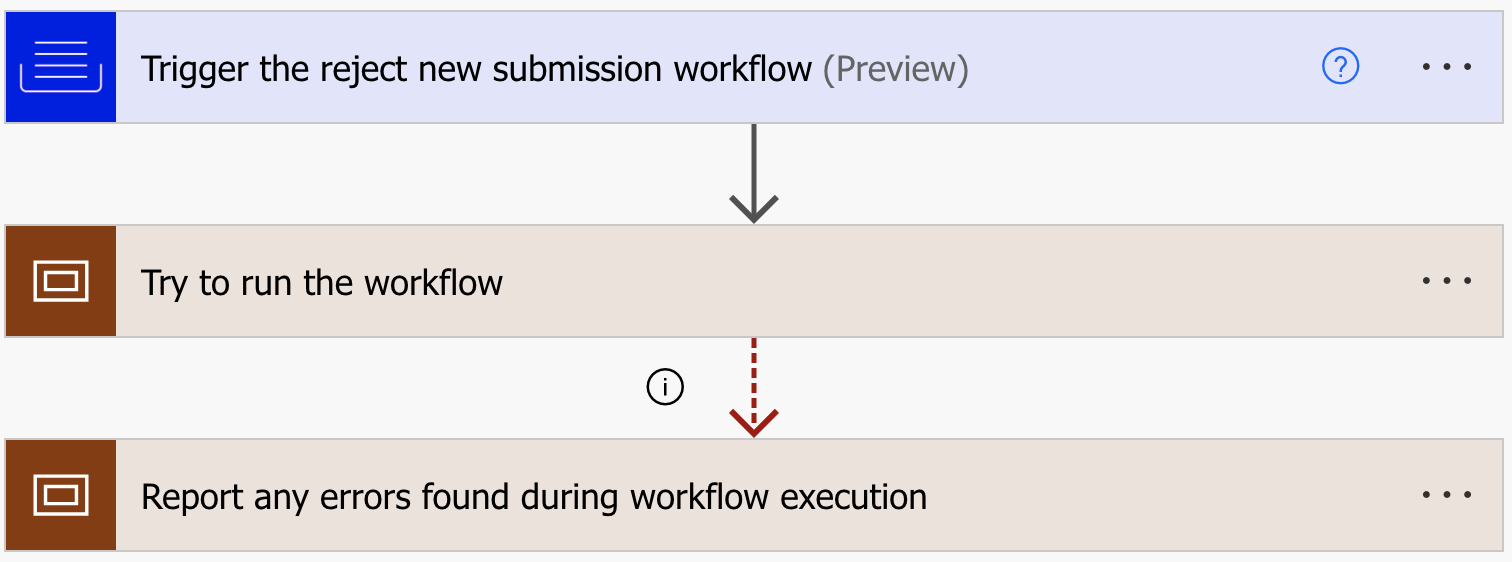
Stage 1: Trigger the reject new submission workflow
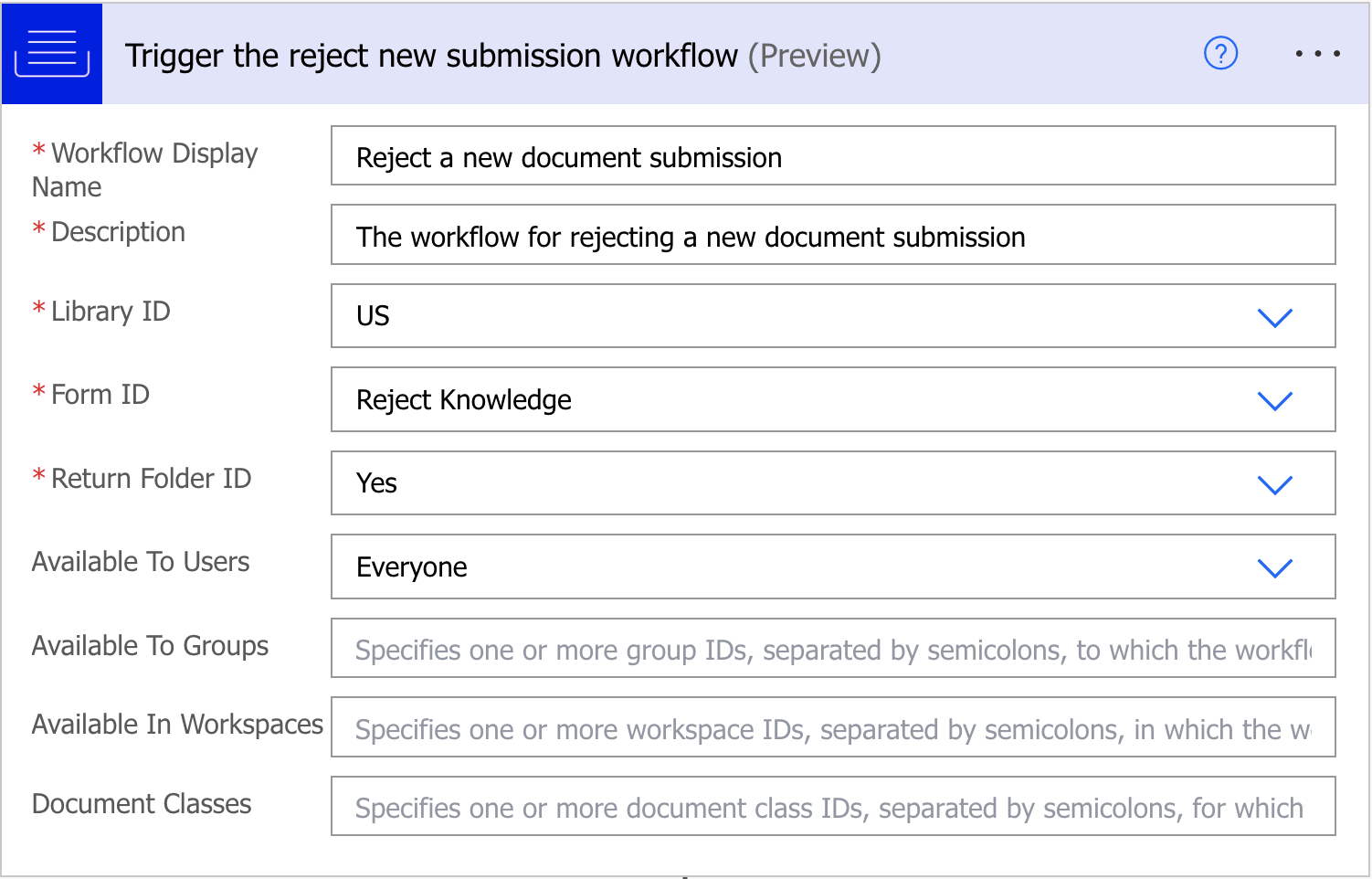
Select the first block in the workflow.
Workflow Display Name: Provide a name to the workflow you are creating. This workflow will be available in the Edit: Workflow routing dialog box.
Description: Specify the description of the workflow you are creating.
Library ID: Specify the Knowledge library ID where the workflow must be available.
Form ID: Specify the ID of the form that is presented to users to collect inputs used by the workflow.
Return Folder ID: Specifies if the document’s folder ID is required by the workflow. This is helpful if you want to use a specific folder where the selected document is located further in your Power Automate script. Set this value to Yes.
Available to users: Specify one or more user IDs separated by semicolons, to whom the workflow is available. Select Everyone if you wish to make the workflow available to all users in your organization.
Figure: Trigger the reject new submission workflow
Stage 2: Running the workflow
You don't need to make any changes in this stage because all the required configurations are already made when the template was built. Here are the different connectors used to build this workflow:
Connector | Figure | Field description | Dynamic content used |
|---|---|---|---|
iManage Insight Plus connector Description: Get curation configuration for the Knowledge Library of the selected document |  |
|
|
iManage Work connector Description: Get permissions set on the Reject folder | 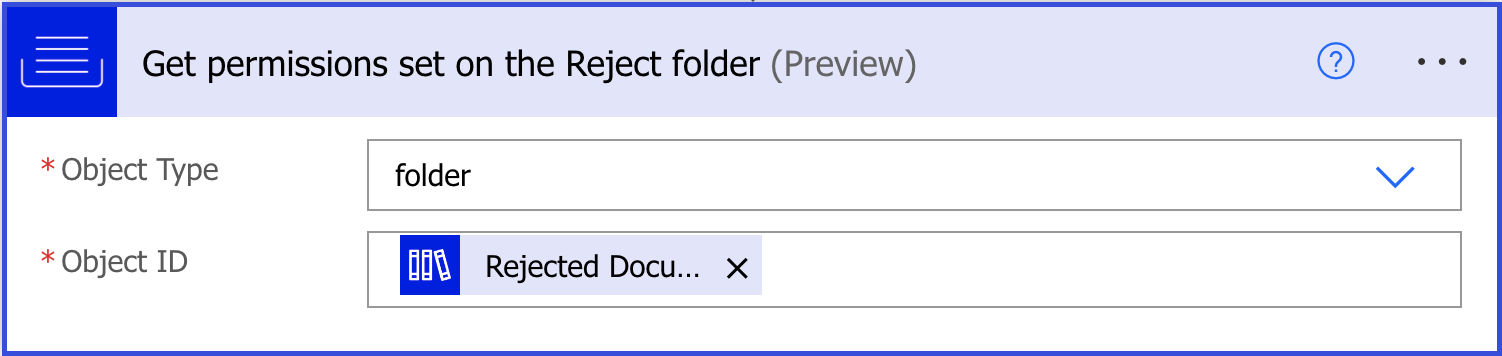 |
|
|
iManage Work connector Description: Get permissions of the current version of the document | 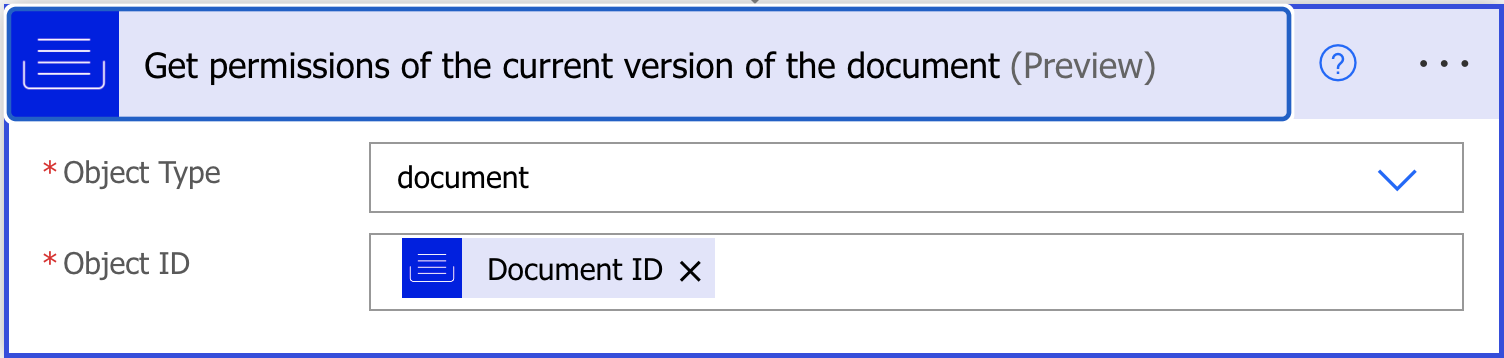 |
|
|
iManage Work connector Description: Update the workflow state as In progress | 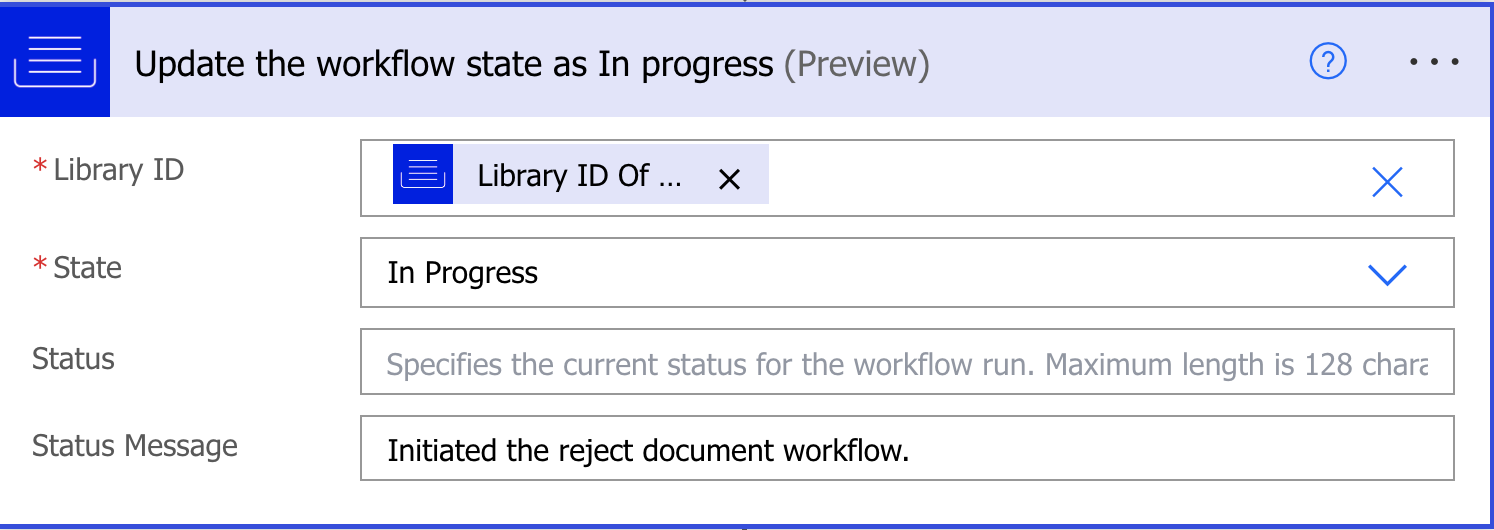 |
|
|
iManage Work connector Description: Update default security on the selected document version | 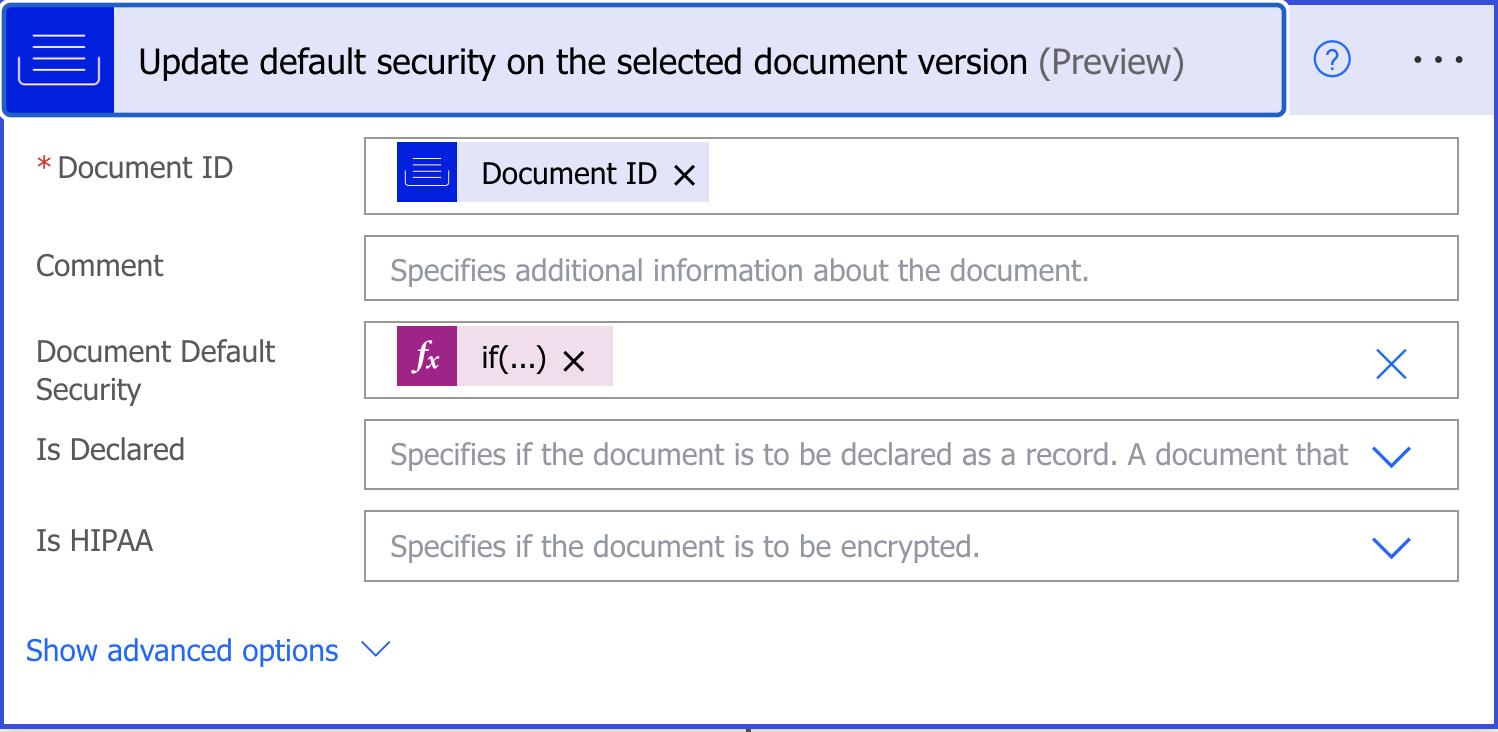 |
|
|
iManage Work connector Description: Move the entire document to Reject folder in the knowledge library |  |
|
|
iManage Insight Plus connector Description: Set curation properties on the selected document |  |
|
|
iManage Work connector Description: Update workflow state as successfully completed |  |
|
|
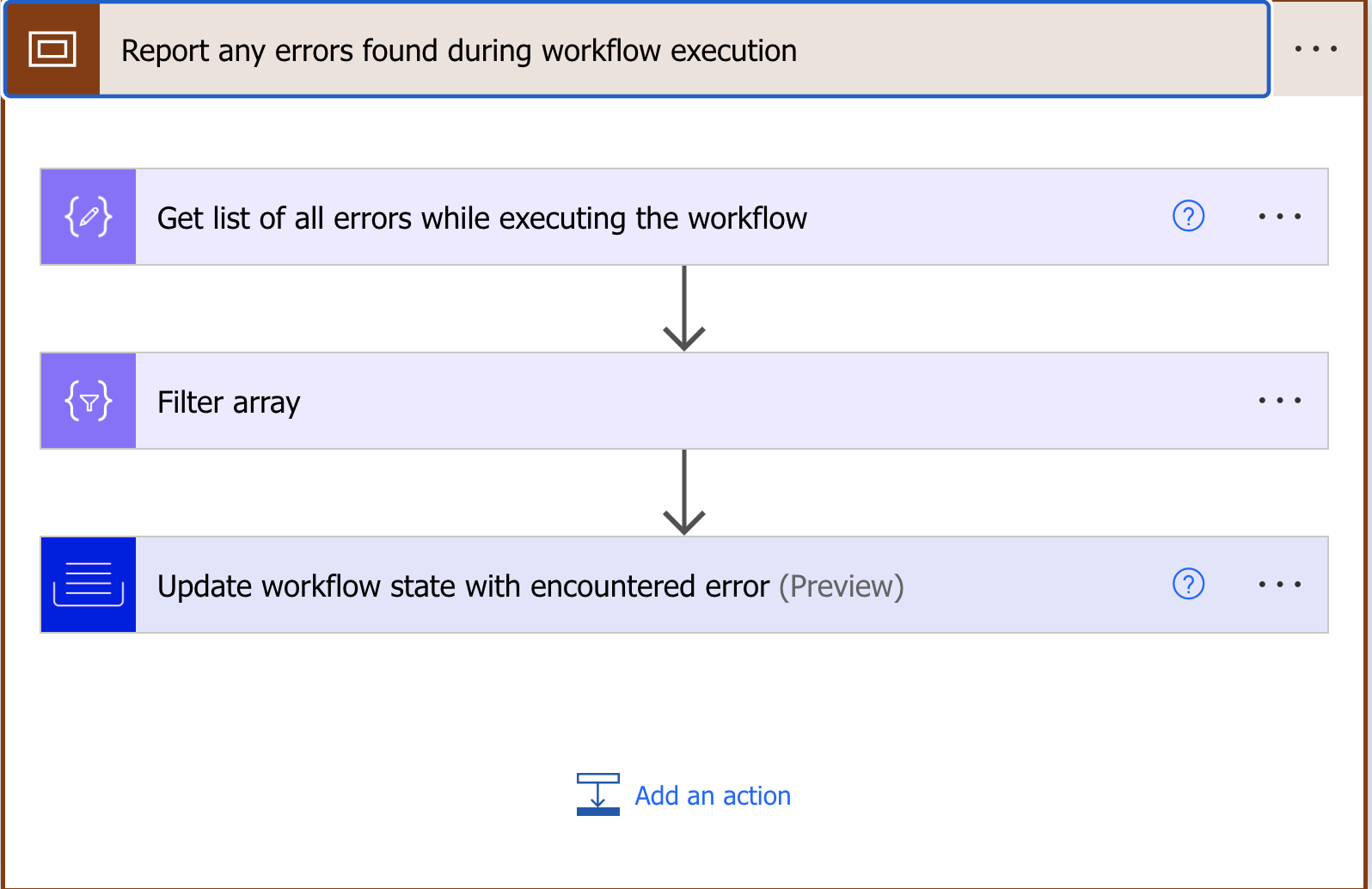
Stage 3: Reporting errors
You don't need to make any changes in this stage because all the required configurations are already made when the template was built.
Figure: Reporting errors found during workflow execution