Records Manager helps you to institute a uniform records policy across all types of media, including both physical and electronic records. With electronic records, it's critical to enable users to maintain electronic information within its original context so as to not disrupt business processes, while also retaining the necessary level of control to perform records activities and schedule records policies. This feature to implement a records policy in the context of another repository is called an electronic records model. With this model, you can catalog and control records assets without moving information into another repository.
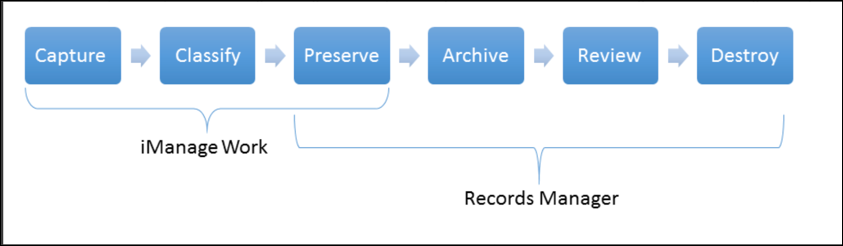
In particular, Records Manager manages the complete lifecycle of content filed in the iManage document management system. iManage continues to be responsible for the capture, classification, and preservation of electronic content. Therefore, the primary actions performed by end users on electronic content continue to occur through iManage. Records Manager is responsible for preserving records metadata, managing the records file structure, managing and executing records policies, and searching and reporting disposition eligibility. iManage users always have direct access to their content, but can feel comfortable knowing that it is managed according to the records policy defined by Records Manager. The following figure outlines how iManage Work and Records Manager integrate to manage the complete lifecycle of an electronic record.
NOTE: You must have the View Records privilege to view and work with electronic records.
This section includes the following topics: